Teaching
My teaching approach has been shaped by my experiences as a learner, instructor, and collaborator working across disciplines and with planning practitioners internationally. I believe that planning education should be experiential, interdisciplinary, and inclusive. As an educator, I pursue two primary goals: (1) bridging the classroom with planning and policy practice through applied and collaborative learning, and (2) creating learning environments that support students from diverse socioeconomic, cultural, and disciplinary backgrounds.
Bridging Classroom Learning with Planning Practice
To connect coursework with real-world practice, I design assignments that encourage students to apply what they learn in class to contemporary planning challenges. My teaching materials integrate professional planning documents, long-range transportation plans, government reports, planning cases, and academic literature. Through case studies, plan reviews, and project-based learning, students develop professional skills while learning to identify context-sensitive planning solutions.
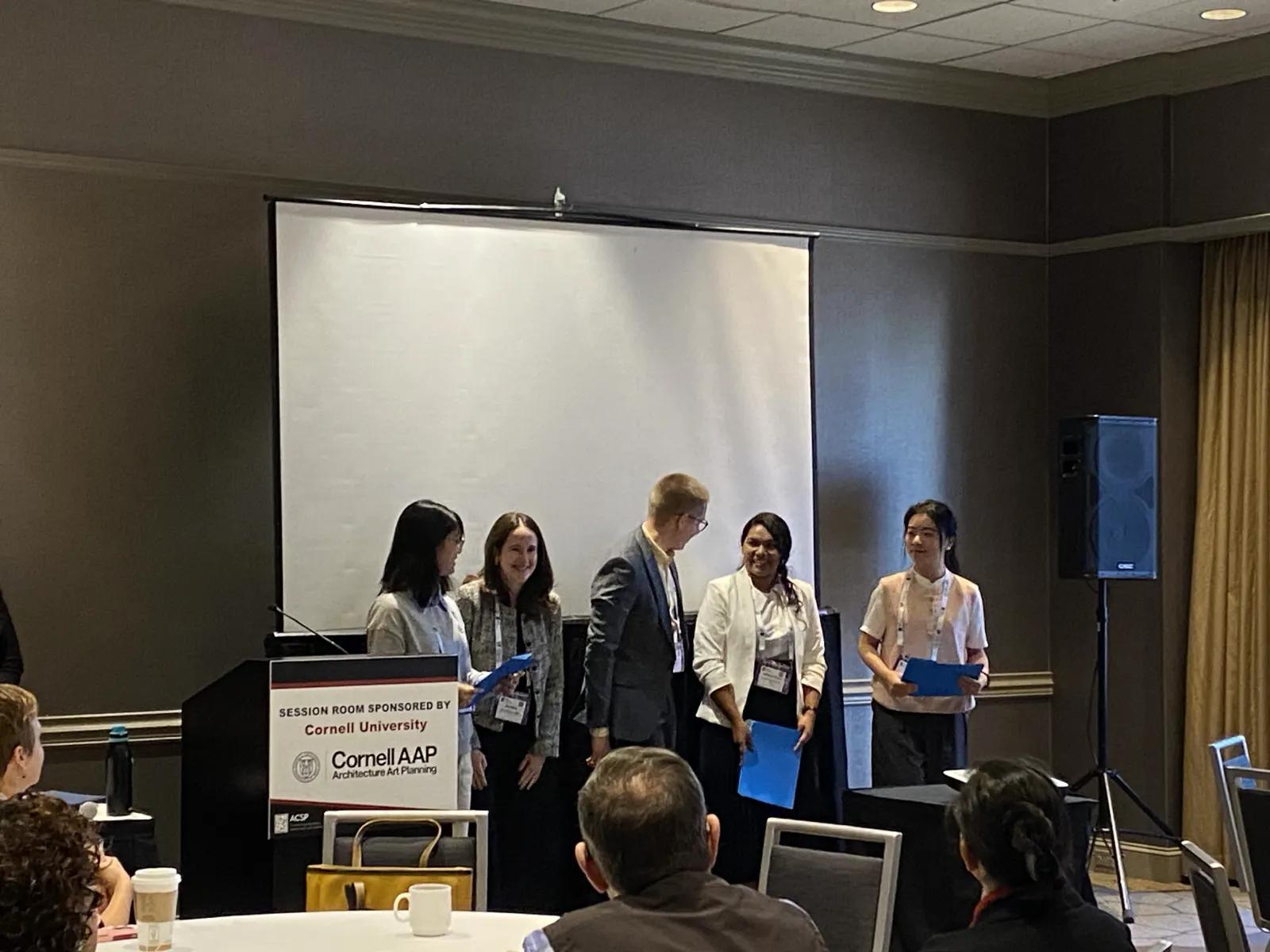
Recently, three students from my Planning Policy and Process course (Xinyi He, Sofia Rita, and Huixin Fu) received the Best Student Case Study Award from the Global Planning Educator Interest Group (GPEIG) of the Association of Collegiate Schools of Planning (ACSP) for a case study on informal housing governance in India that they developed in my class. Seeing students grow into independent researchers and planning professionals through these practice-based assignments has been one of the most rewarding aspects of my teaching.
Preparing Students for the Future of Planning
Planning education should evolve alongside the profession itself. As emerging technologies continue to reshape planning practice, I continually update my courses to reflect new tools, methods, and professional frontiers.
For example, I recently redesigned a plan evaluation assignment by incorporating generative AI into the learning process. Rather than treating AI as a replacement for human judgment, students compared AI-generated evaluations with human-coded assessments and critically reflected on both the opportunities and limitations of large language models in planning practice. This assignment helped students develop both technical skills and critical perspectives on the role of AI in planning and design. The course redesign was later supported by a Teaching Transformation Grant from the College of Design and Engineering at the National University of Singapore.
Supporting Student Success
Creating an inclusive classroom where students feel comfortable sharing diverse perspectives is central to my teaching philosophy. As a first-generation college student, I understand the transformative role that higher education can play in expanding opportunities and promoting social mobility. This experience has shaped my commitment to supporting students from diverse backgrounds and creating classrooms where everyone feels respected, supported, and empowered to succeed.
To foster an inclusive and engaging learning environment, I intentionally assign readings written by scholars from diverse academic and demographic backgrounds and encourage participation through multiple formats, including reading reflections, mini-presentations, and end-of-class takeaways. I also make myself available through additional office hours and informal conversations so that I can better understand each student's learning style, academic goals, and individual needs.
Ultimately, my goal is to create classrooms where students feel intellectually challenged, personally supported, and confident in developing their professional identities as planners, scholars, and future leaders.
Courses taught
I have taught undergraduate and graduate courses in urban planning and public policy at four universities in the United States and Singapore. My teaching spans planning history and theory, transportation planning and policy, land use planning, planning methods, and planning for an aging society.
National University of Singapore
- Planning Policy and ProcessMaster's required, Fall 2024 and 2025
- Urban Planning History and TheoryMaster's required, Spring 2025 and 2026
- Urban Infrastructure and Mobility SystemsMaster's required, Fall 2025
- DissertationMaster's elective, Spring 2025
University of Oregon
- Planning AnalysisMaster's required, Fall 2023
- Urban TransportationUndergraduate elective, Fall 2023
- Introduction to City PlanningUndergraduate required, Winter 2024
- Transportation PolicyUndergraduate elective, Winter 2024
- Land Use PolicyMaster's elective, Spring 2024
- Planning for All AgesNewly developed undergraduate elective, Spring 2024
University of California, Riverside
- Transportation PolicyNewly developed undergraduate elective, Spring 2023
- Special Topics in Public Policy: Post-Pandemic CitiesNewly developed undergraduate elective, Winter 2023
University of Pennsylvania
- Urban Research ColloquiumCo-instructor, undergraduate elective, Spring 2022